http://needleinthehay.net/writing-contests/
https://www.boroondara.vic.gov.au/about-council/awards/boroondara-literary-awards/enter-boroondara-literary-awards
Wednesday, 21 June 2017


Sunday, 20 December 2015
Why Michael Leunig is my favourite writer
Michael Leunig is my favourite writer. Period. As an author and regular contributor in The Age newspaper he is at the epitaxy of modern poetry and social commentary. Each week he provides a wondrous perspective of current events in a sophisticated, caring and proactive manner. Here is this week's entry, found at http://www.theage.com.au/photogallery/-48224.html .
 As a writing exercise, examine closely the structure of the poem. A simple structure, it represents an existential angst simply, then converted into 1,2,1,2 poetry form. Have a go at this yourself!
Here's another example of why Leunig is a treasure...man, he's so good it kills me.


Here's another example of why Leunig is a treasure...man, he's so good it kills me.

Thursday, 3 December 2015
Wonderful writing opportunity for Storybird.com!
This month www.storybird.com hosts a writing opportunity for aspiring writers. See below! Click here to pursue the link and good luck!
| |||||||||||||||||||||||||||||||||||||||
| |||||||||||||||||||||||||||||||||||||||


Tuesday, 17 November 2015
The Brilliant Behaviours Checklist- a must for all emerging and consolidating GnTnC teachers
From "Possibilities for Learning" website.
Brilliant Behaviors
Finding
Bright and Gifted Students With Brilliant Behaviors
Historically, testing has been the
most common lens used to inspect students’ potential. Today, concerns regarding
the use of many tests with students from culturally and economically diverse
backgrounds has reduced confidence and reliance on them.{{112}} More
contemporary approaches that respect this diversity can be supported by using
the Tools provided here.
Students indicate their need for more
challenge in a variety of ways, some more direct than others. Some students
demand, some ask and some have to be found. This section provides
guidance for stimulating students’ potentials during classroom
activities. It includes alternate formats of a tool, the Brilliant
Behaviors checklist, for observing students to assess the nature and extent of
those behaviors during that activity.
Students
should be observed for signs of the Brilliant Behaviors while they are engaged
in theirstrongest subject(s), their passions. Students’ greatest academic strengths are the areas in which there
is the greatest need for curriculum differentiation.
This
list of Brilliant Behaviors focuses attention on 13 observable characteristics
which will directly help teachers challenge students in their areas of
strength. Many other, longer lists of behavior characteristics are available for
use in identification procedures (for example, Clark, 1997; Martinson, 1974;
Renzulli, Smith, White, Callahan, & Hartman, 1976). The Brilliant Behaviors
list is not meant to be exhaustive. It includes only those behavior
characteristics which will be the keys to determining the curriculum
differentiation strategies most appropriate for each student. See the
section Matching Strategies to Strengths for
the Tools (the Guides) used to do this.
The Brilliant Behaviors and
descriptions are based on a list developed by Kanevsky, Maker, Nielson and
Rogers (1994) which first appeared in Maker & Nielson’s Curriculum
Development and Teaching Strategies for Gifted Learners (2nd edition). That
list was an adaptation of the traits, aptitudes and behaviors Frasier and
Passow{{113}} felt contributed to giftedness. All of these authors sought
behaviors that would appear in many cultures, in girls as well as boys, in
students with strengths in any subject area or type of intelligence, and in
“meek or macho” students. In other words, the list is intended to be sensitive
to brilliance in students of different cultural backgrounds, genders, subject
areas and temperaments.
|
Alternate Formats
|
You will find seven versions of the
Brilliant Behaviors in this chapter. Each is used to collect similar
information but in different contexts and by different observers (teachers, or
parents, or student self-observations). Offering different observers the same
lenses to view students in different settings and activities provides
consistency in the observations. This facilitates later conversations among the
observers and decision-makers when everyone has been looking for the same
things.
§ The first three individual forms can
be used in observation activities. The first is the basic Brilliant Behaviors form; the second is a set of descriptors to supplement any of the other forms;
the third is a screening version with a frequency
rating scale.
§ The self-assessment checklist asks students to rate
themselves.The group observation form is
for whole class or group observations.The referral form is to be completed by teachers when
determining who should be offered opportunities to participate in special
programs.Theportfolio conferencing checklist is
completed by teachers following a discussion with a student regarding the
contents of her or his portfolio. Each version of the Brilliant Behaviors
appears with directions for its use and interpretation.
|
Applications
|
Although the Brilliant Behaviors can
be used for referral, nomination or assessment, they are not intended to be the
sole means of identifying or labeling gifted students. For that task, other
information must be collected and considered (student products and portfolios,
test scores, etc.). There is no cutoff score or minimum number of behaviors
that must be found; one is sufficient to move on with the process of
differentiating curriculum.
The
data from these Tools can complement tests scores or avoid the need for them
depending upon the decision to be made. If no official “gifted” designation is
needed, just transfer information collected from the Brilliant Behaviors to
the Guide for Selecting Differentiation
Strategies to continue with the curriculum differentiation
process without labeling.
If official designation is necessary
for access to alternative services and placements, one or more versions of the
Brilliant Behaviors can be used to collect data to use in the identification
process. The individuals involved in making this determination should meet
prior to collecting data to make some crucial decisions:
§ What services and placements are
available?
§ What sorts of students will benefit
most from these opportunities?
§ How many students can be
accommodated?
The answers to these questions will shape
the answer to efforts to the even more complex problem of finding students.
Once they are resolved the big problem can be addressed: How can these students
be found?
A solution to the last question will
involve Tools, the data they collect and a process to apply criteria for
selection to these data so decisions and placements can be made. The Tools,
data and decisions must locate the students best suited to the types of
programming to be offered. Different possibilities include self-paced
individual projects, creative problem solving groups, or differentiated
curricular experiences in the regular classroom. One or more of these options
would be appropriate for some students and inappropriate for others.
Before undertaking data collection,
the individuals involved should understand the role each kind of information
will play in the final decision. Individuals involved in the process also need
a clear understanding of their roles in data collection, decision-making and
program planning. Timelines for data collection, meetings and decision-making
should also be clear to all participants in the process including students,
parents and teachers.
Monday, 16 November 2015
11 authors' strategies for overcoming writer's block
11 authors' strategies for overcoming writer's block
Mashable
Writer's block — an author's worst nightmare. The dreaded lack of creative ideas and inability to produce new work has writers across the world trembling in fear. Famed novelists F. Scott Fitzgerald and Ray Bradbury are just two of many creative minds that have suffered from this incorrigible mental block. And let's face it, if a writer tells you its never happened to them, they're probably lying. Mashable compiled the strategies different authors use to overcome writer's block, which should Read the full story
Shared from Apple News
Mashable
Writer's block — an author's worst nightmare. The dreaded lack of creative ideas and inability to produce new work has writers across the world trembling in fear. Famed novelists F. Scott Fitzgerald and Ray Bradbury are just two of many creative minds that have suffered from this incorrigible mental block. And let's face it, if a writer tells you its never happened to them, they're probably lying. Mashable compiled the strategies different authors use to overcome writer's block, which should Read the full story
Shared from Apple News
A wonderful informational report by Lauren in Year 2!
Saturday, 14 November 2015
Money Talks News: Help (Urgently) Wanted: 100,000 New STEM Teachers
Help (Urgently) Wanted: 100,000 New STEM Teachers (USA story)
Money Talks News
With more than 100,000 job openings in schools across the United States, teachers in STEM-related fields are a hot – and desperately needed – commodity. New York-based nonprofit 100Kin10 is working to train and place 100,000 teachers in STEM (Science, Technology, Engineering and Math) subjects by 2021, CNN Money reported. “There’s an urgency to meet this target because our schools have to better prepare kids for the future where the economy will largely be driven by STEM-based jobs,” Talia Read the full story
Shared from Apple News
Money Talks News
With more than 100,000 job openings in schools across the United States, teachers in STEM-related fields are a hot – and desperately needed – commodity. New York-based nonprofit 100Kin10 is working to train and place 100,000 teachers in STEM (Science, Technology, Engineering and Math) subjects by 2021, CNN Money reported. “There’s an urgency to meet this target because our schools have to better prepare kids for the future where the economy will largely be driven by STEM-based jobs,” Talia Read the full story
Shared from Apple News
Slate: The Department of Education’s Plan to Go Open
The Department of Education’s Plan to Go Open
Slate
In the early 1800s, Thomas Davenport, a poor, young, self-taught blacksmith in Vermont tinkered with magnets to create, and eventually receive a patent for, the first electric motor. Nearly 200 years later, middle-schoolers in Albemarle, Virginia, are tinkering with modern 3-D–printing technology to reconstruct and model his historic invention.
This isn’t the sort of lesson that you would find in a standard middle-school science class. Albemarle County Public School District—in collaboration with the Smithsonian Institution and the University of Virginia—is creating this project-based curriculum with nearly $3 million in support from the Department of Education's Investing in Innovation, or i3, grants. With these competitive grant dollars, the district is developing all of the necessary materials: instructional materials and assessments; detailed directions with figures, photographs, animations, and 3-D–printer files; and even professional development materials for teachers.
According to Chad Ratliff, assistant director of instruction in Albemarle, students today can’t learn about the inner workings of objects they interact with daily, like their iPhones, by just opening them up—they’re too complex. Teaching engineering through historical inventions allows students to break down and understand the basic concepts, while integrating STEM learning with history.
According to Chad Ratliff, assistant director of instruction in Albemarle, students today can’t learn about the inner workings of objects they interact with daily, like their iPhones, by just opening them up—they’re too complex. Teaching engineering through historical inventions allows students to break down and understand the basic concepts, while integrating STEM learning with history.
This investment is great for the students of Albemarle, but what about those enrolled in other school districts across the country? Will students, in say, Davenport’s hometown of Williamstown, Vermont, benefit from these kinds of learning experiences?
With little more than a year left in the Obama administration, the Department of Education is taking steps to make sure these kinds of educational materials, developed through public investment, don’t only benefit their grant recipients. The department has proposed that, for itscompetitive grant programs at least, all grantees would be required to openly license the educational materials they develop. By changing the default to open, the department is betting that it can increase the supply of high-quality open educational resources so that other educators can use and improve upon them.
Open educational resources, commonly defined as “resources that reside in the public domain or have been released under an intellectual property license that permits their free use and re-purposing by others,” have gained traction over the past decade in the field of education, withfederal agencies, states, and colleges already exploring the possibilities of open licensing.
It makes sense that resources created with public money should be free for the public to use. And the department sees the potential impact as threefold. First, an open-licensing requirement would allow for more strategic investment, potentially reducing the need to fund duplicative projects. Second, experts in the field would have the ability to improve upon the resources created through its initial investment. Most importantly, the department emphasized that this move could help level the playing field for low-income districts, “promoting equity and especially benefiting resource-poor stakeholders.”
The announcement comes with a few caveats, however. While the Department of Education doles out about $67 billion annually, the vast majority of those dollars are dedicated to formula grants to states and direct grants to individuals—two types of funding that are not covered by the newly proposed rule. Competitive grant funding accounts for just a fraction of that spending—a bit less than $3 billion annually. (The department does not maintain a comprehensive list of annual competitive funding; this estimate was calculated by New America, where I work, based on the latest Department of Education budget information. New America is a partner with Slate and Arizona State in Future Tense.)
That nearly $3 billion, however, supports the development of lessons and instructional plans, professional development resources, and other teaching and learning materials that benefit learners from early childhood through graduate school. Funds go toward supporting the instruction of students from diverse backgrounds, including indigenous groups, migrant students, and students with special needs. Additional programs support literacy, STEM, physical education, arts, and early learning programs. Others target drug prevention programs, student counseling efforts, and efforts to help students navigate the transition from high school to higher education.
The department has already bet big on the promise of open. In partnership with the Department of Labor, it tried out the open licensing requirement on the $2 billion Trade Adjustment Assistance Community College and Career Training program, which provided funding for the development of career training programs. Further, the department’sFirst in the World grants—which support innovative solutions to increase students’ persistence and completion of college—requires all content produced to carry an open license.
Albemarle’s i3 grant won’t be affected by this potential new rule, but the district is nevertheless eager to share their hard work. According to Ratliff, these curricular materials will be made available on the Smithsonian Institute’s website in full, for any and all to download; the district has already heard from interested educators in Pennsylvania, Texas, and California, as well as several internationally. Once the materials are made available, “any teacher from anywhere in the world can download them and implement them in their classrooms.”
And perhaps these sorts of innovative approaches to learning will inspire the next generation of tinkerers and inventors to follow in Davenport’s footsteps—and into the patent office.
The Washington Post: How to build a better teacher: Groups push a 9-point plan called TeachStrong
How to build a better teacher: Groups push a 9-point plan called TeachStrong
The Washington Post
By Lyndsey Layton | November 8 at 6:23 PM A coalition of 40 education groups — including some strange bedfellows — is starting a national campaign aimed at “modernizing and elevating” the teaching profession. The groups, organized by the left-leaning Center for American Progress under the banner TeachStrong, want to make the status of teachers an issue in the 2016 presidential race and in policy discussions on the state and local levels. “We feel like this is the perfect time to bring people Read the full story
Shared from Apple News
The Washington Post
By Lyndsey Layton | November 8 at 6:23 PM A coalition of 40 education groups — including some strange bedfellows — is starting a national campaign aimed at “modernizing and elevating” the teaching profession. The groups, organized by the left-leaning Center for American Progress under the banner TeachStrong, want to make the status of teachers an issue in the 2016 presidential race and in policy discussions on the state and local levels. “We feel like this is the perfect time to bring people Read the full story
Shared from Apple News
Saturday, 7 November 2015
International Business Times, India Edition: Traditional classroom-teacher method better than online schooling, says report
Traditional classroom-teacher method better than online schooling, says report
International Business Times, India Edition
Despite digitisation of learning, charter schools have failed to match the teacher-classroom learning experience. Read the full story
Shared from Apple News
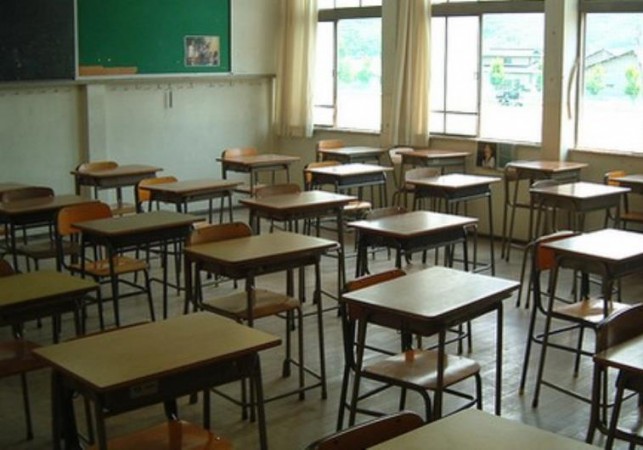
A new study by Stanford University claims online school students are falling behind their peers. The traditional teacher-classroom method has proved more successful.
The study said students under the conventional school system scored better in Math and reading as compared to students in charter schools — publicly-funded independent schools now in demand in the United States. Charter schools provide the flexibility of learning online in a virtual classroom. The US educational technology sector wants to bring in hi-tech start-up innovation into learning and teaching, combining technology with education, said a BBC report.
"The National Study of Online Charter Schools offers a rigorous analysis of the operations of online charter schools. It also offers an analysis on their policy environments, and their impact on student achievement," said the report.
Despite digitisation of learning, charter schools have failed to match the teacher-classroom learning experience for the students. "In Math, it was the equivalent of pupils having missed an entire year of schooling," it added.
The idea of virtual classrooms has been growing in the United States, and they are being seen as an alternative option to traditional forms of schooling. As per the study, there are currently 200,000 pupils registered to online charter schools in the US, said the report.
An interesting feature of this is, students pay no tuition fee. Also, rural students with limited options or those with health problems benefited under this system, BBC stated.
Doubts about approach
This biggest headache of this form of schooling, identified by workers, was keeping students engaged in the class. "Challenges in maintaining student engagement are inherent in online instruction," said Brian Gill, one of the co-authors of the report.
Researchers compared performances of students in online schools to mainstream schools. The factors included race, gender, ethnicity and relative family wealth. It was found that online charter schools would take in a higher number of "white students".
The National Alliance for Public Charter Schools said they were disheartened by the results,BBC reported.
"The findings are sombre, but at least they provide evidence for discussing the future role of such online schools," said James Woodworth of Stanford's Centre for Research on Education Outcomes.
Article Published: November 4, 2015 17:55 IST
Subscribe to:
Comments (Atom)